
ALM360: Integrated Balance Sheet Management for Credit Unions
Unify analytics, execution, and benchmarking to make smarter, faster and more confident decisions.

What is ALM360?
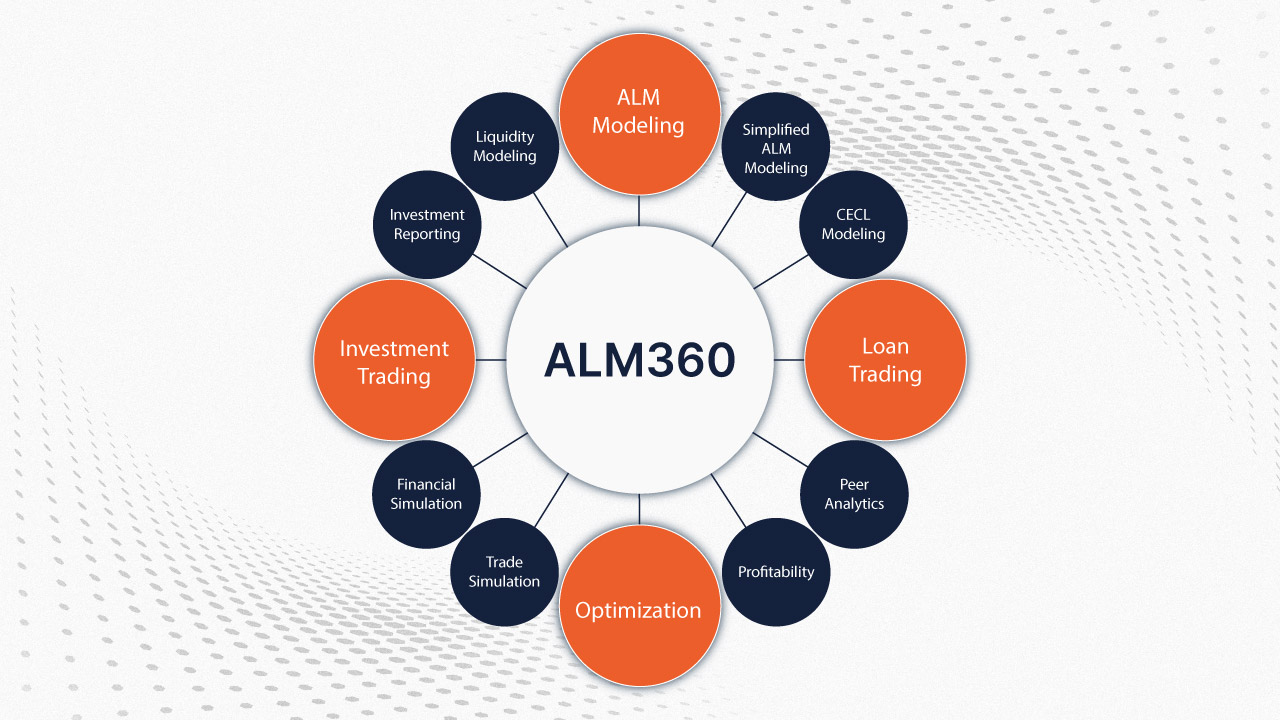
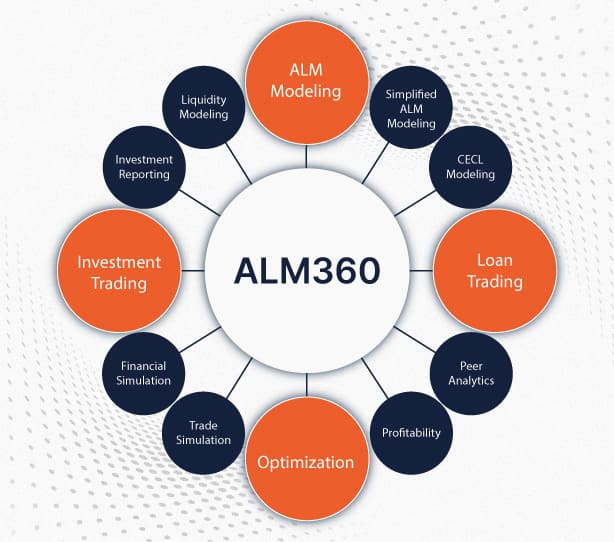
ALM360 is a modular, end-to-end platform empowering credit unions to manage risk, optimize performance, and execute strategy with precision. It unifies all balance sheet management tools under one ecosystem, transforming how institutions understand and optimize their financial health.
At the heart of the platform is a shared data and modeling engine that powers every module, from ALM and CECL to trading, budgeting, and peer analytics. This means that every tool is working from the same assumptions, the same inputs, and the same real-time balance sheet view.
"What separates ALM360 from other ALM solutions is its simplicity and the people behind it. The reporting is straightforward, easy to understand, and provides the information our management team and board need to make informed decisions. Just as important, the QuantyPhi team is responsive, knowledgeable, and genuinely cares about helping us succeed. They feel like an extension of our team rather than a vendor. We highly recommend ALM360 to any credit union looking for a practical, effective approach to ALM and balance sheet management."
Joel Strozeswski
President, Holy Family Memorial Credit Union
Ready to See ALM360 in Action?
The Unified Balance Sheet Management Platform for Credit Unions
Why Choose ALM360?
End-to-End Integration
Modeling, trading, reporting, and benchmarking in one place.
Real-Time Strategy Execution
Live investment pricing, scenario modeling, and ALM integration.
Regulatory Readiness
Built-in tools for ALM, CECL, liquidity, and peer benchmarking.
Unified Modeling
Shared data engine powers every module for consistency and alignment.
Scalability
Supports both full and simplified ALM modeling for institutions of all sizes.
Auditability and Governance
Single source of truth, transparent assumptions, and audit-ready reporting.
Modules and Capabilities
ALM360 vs. Traditional Siloed Systems
| Feature/Capability | ALM360 Integrated Platform | Traditional Siloed Systems |
|---|---|---|
| Data Model | Single, unified model powers all modules | Multiple, disconnected models per system |
| Decision Consistency | All decisions based on shared assumptions and real-time data | Conflicting outputs, manual reconciliation needed |
| Scenario Analysis | Apply scenarios across ALM, CECL, liquidity, budgeting, etc. | Scenarios must be run separately in each system |
| Reporting | Integrated, real-time board and ALCO reporting | Manual compilation, risk of discrepancies |
| Collaboration | Cross-functional teams work from the same data and tools | Teams operate in silos, limited collaboration |
| Auditability & Governance | Transparent, traceable, audit-ready reporting | Difficult to document and trace assumptions |
| Regulatory Readiness | Built-in compliance tools for ALM, CECL, liquidity, benchmarking | Compliance managed separately, risk of gaps |
| Workflow | Seamless, interconnected workflow across all functions | Disconnected workflows, frequent data transfers |
| Scalability | Modular growth path, supports all institution sizes | Scaling requires new systems, retraining staff |
| Operational Efficiency | Fewer manual processes, reduced errors, faster decisions | Manual processes, higher risk of errors, delays |
| Real-Time Impact Analysis | Instantly see balance sheet impact of any action | Delayed feedback, limited scenario testing |
| Cost-Efficiency | Low barrier to entry, cost-efficient onboarding, annual contract | High integration and maintenance costs |
Who Should Use ALM360?
- Credit union executives, CFOs, ALCO members, risk and treasury professionals
- Institutions seeking scalable, integrated, and compliant balance sheet management